
Available now. Master AI with our complete toolkit.
PromptWorksAI
Most people use AI like a search engine. They ask. They get something generic back. They move on.
Operators use it differently. They give it structure. They get consistent, high-quality results. Every time.
PromptWorks builds practical tools for people who want to close that gap — field guides, frameworks, and operator resources for getting real work done with AI.
Start with the Field Guide. Go deeper with the Operator Pack.
Get the Free Diagnosis Guide
Enter your email and we'll send you:
"Fix the 5 Reasons Your AI Keeps Disappointing You"
— instantly.
Frequently Asked Questions
How do I write more effective prompts for AI like ChatGPT or Claude?
The biggest factor is structure, not length. Strong prompts specify five things: the role the AI should take, the context it needs, the exact task, the constraints, and the output format. Vague prompts force the model to guess, which is why the answers come back generic.Is there a framework for writing high-quality AI prompts?
Yes. The most reliable one follows five elements — Role, Context, Task, Constraints, Output. Naming all five turns a vague request into a precise instruction, and it works across ChatGPT, Claude, Gemini, and any other model.Why does my AI output sound generic or shallow?
Usually because the prompt is missing a role or missing context. Without a specific role, the model averages every perspective into beige competence. Without context, it answers the generic version of your question. Adding both sharpens the output immediately.How do I troubleshoot bad AI responses?
Diagnose which of five things is missing: a specific role, enough context, a precise task, clear constraints, or a defined output format. Generic output means no role. Bloated output means no constraints. Each failure points to one missing element.What's the difference between casual AI use and operator-level use?
Casual users ask and hope. Operators direct — they structure the request, treat the first output as a draft, and refine it in one pass instead of starting over. The result is consistent, high-quality output instead of random ones.What is PromptWorks?
PromptWorks makes practical guides for people who use AI to do real work. It teaches an operator-level system for getting reliable output from ChatGPT, Claude, Gemini, and other models — built around structure and iteration rather than one-off "magic prompts."What is the free Diagnosis Guide?
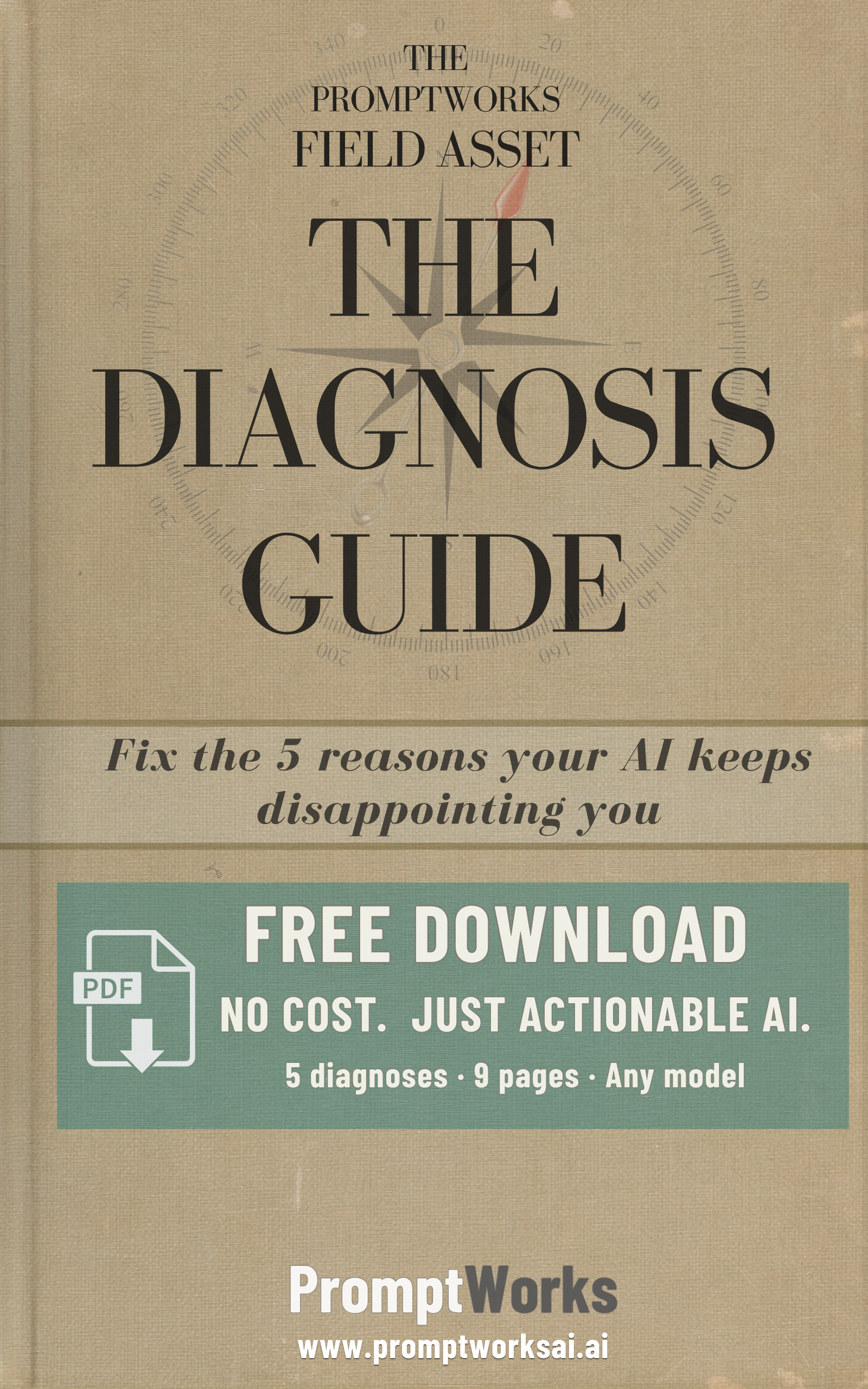
It's a free 9-page PDF that walks through the five most common reasons AI output disappoints — generic, shallow, off-target, bloated, or wrongly formatted — and the fix for each. It's available at promptworksai.ai/diagnosis.What is the AI Field Guide?
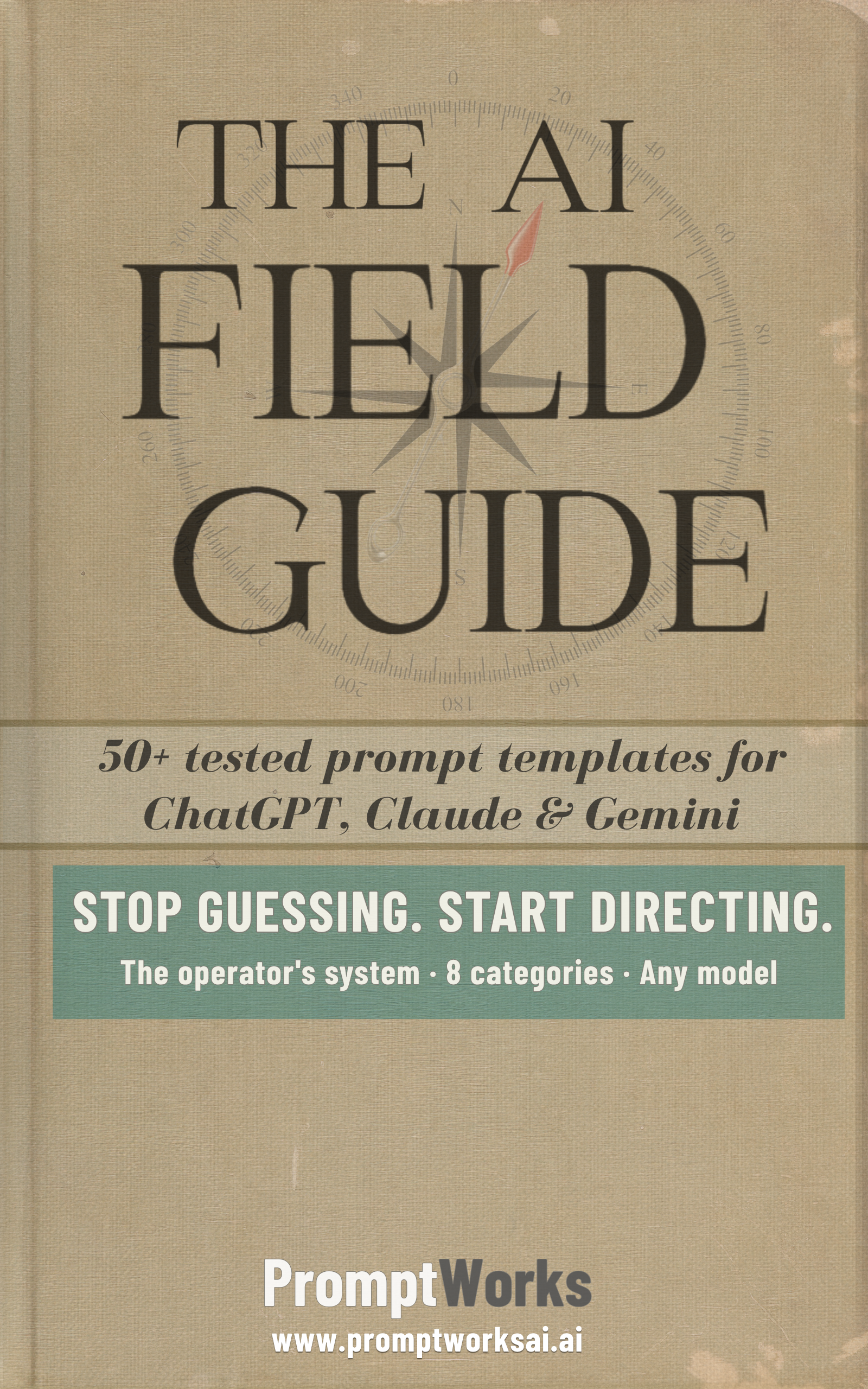
The AI Field Guide is a paid guide with 50+ tested prompt templates across 8 categories, plus the Role-Context-Task-Constraints-Output framework and an iteration protocol for improving weak outputs. It works with any major AI model.What is the Operator's Toolkit?
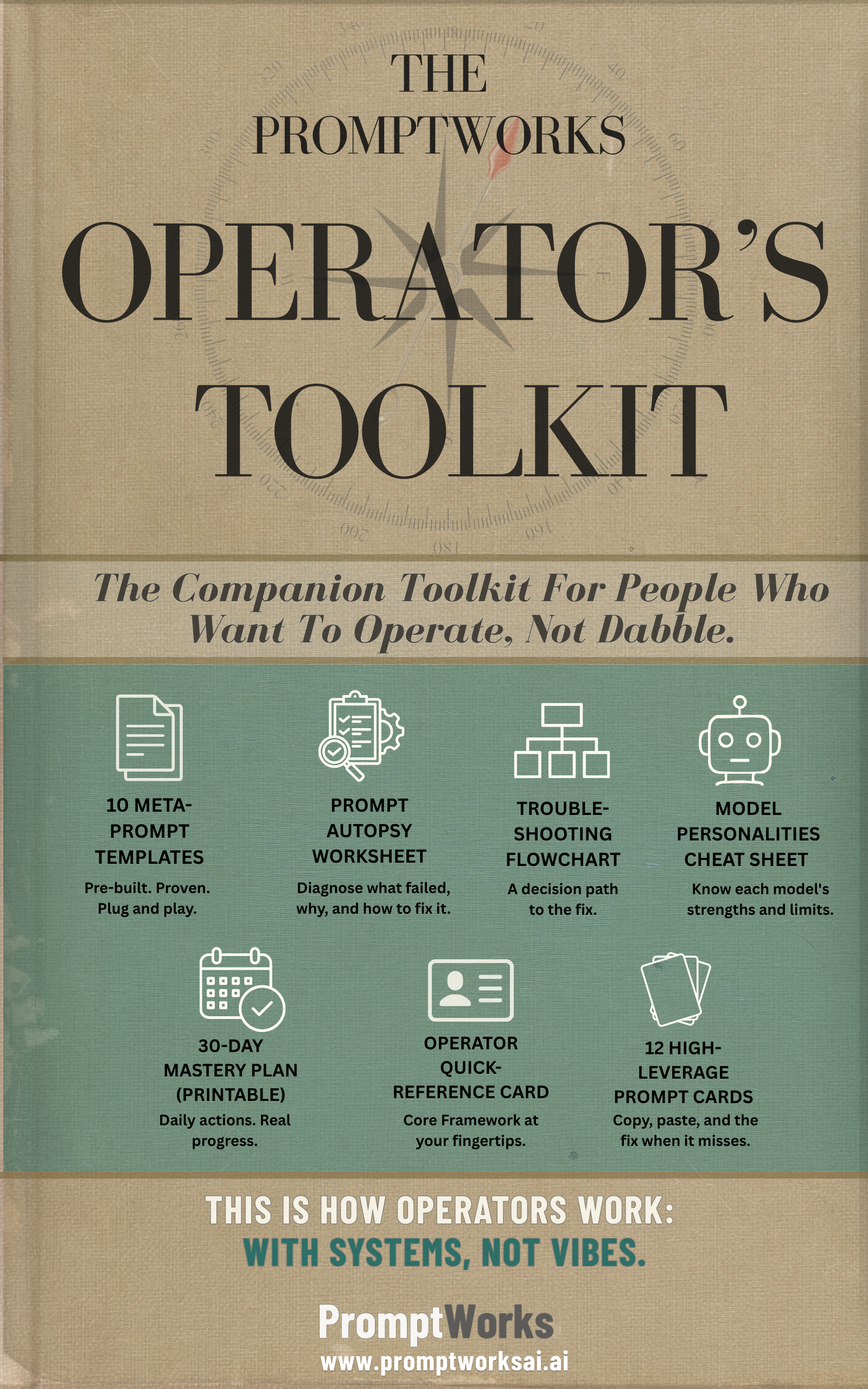
It's a companion toolkit of seven printable resources: meta-prompt templates, a prompt diagnostic worksheet, a troubleshooting flowchart, model cheat sheets, a 30-day plan, a quick-reference card, and 12 ready-to-use prompt cards.What is the "operator's system" PromptWorks teaches?
It's the five-part method behind every strong prompt — Role, Context, Task, Constraints, Output — combined with diagnosing weak outputs and refining them. Controlling those five elements is what makes AI produce consistent, usable results.